Red
Memory Detective
Anı DedektifiThe child recalls and tells a memory of their own. A feeling stops being an abstract idea and becomes a scene from their own life.
Duygu Dedektifi (Emotion Detective) is an emotional literacy board game that helps children recognise, understand and talk about their feelings through play. It is designed to be played with an adult — at home, in class or in session.
Created by Psychologist Gözde Alper and Clinical Psychologist Sinem Çelenk. The game and its cards are in Turkish.
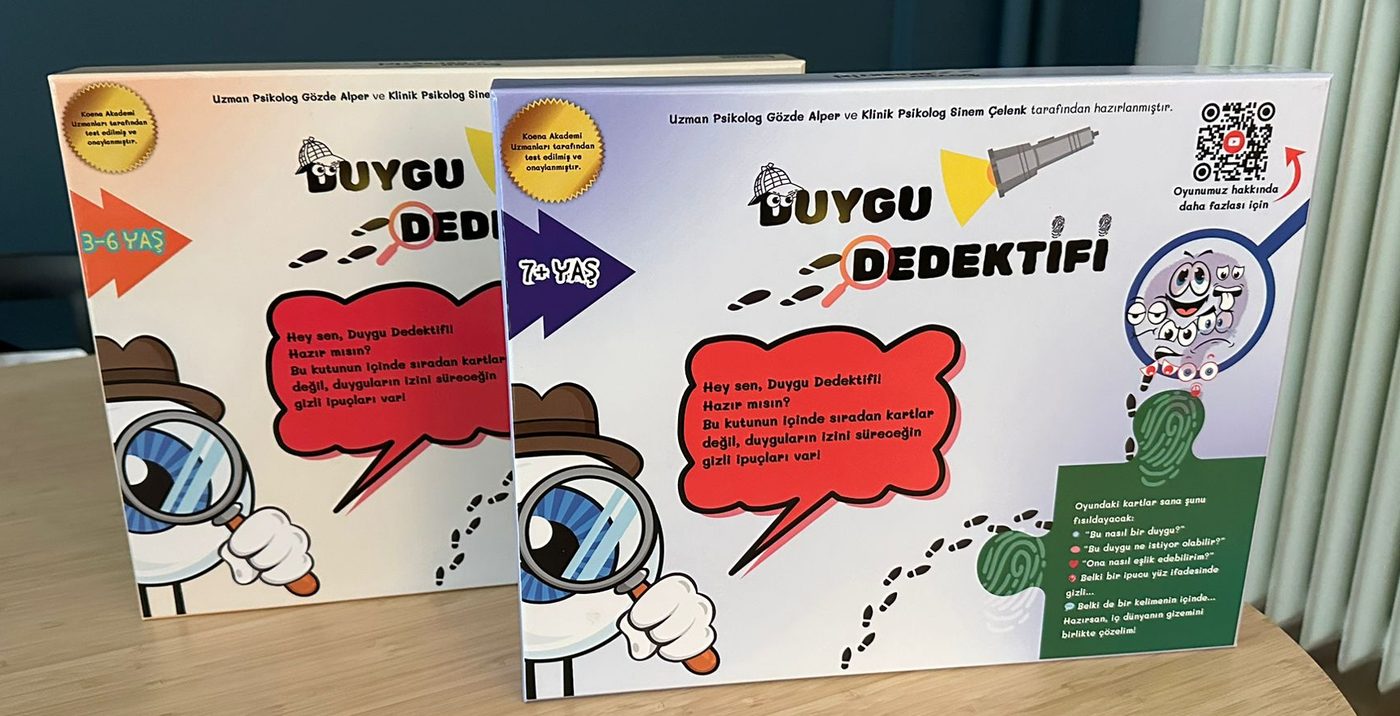
Hey you, Emotion Detective! Are you ready?
This box isn't full of ordinary cards — it's full of secret clues for tracking down feelings!
Preschool box. Short questions, simple language, an Emotion Wheel with six core feelings.
The ages 7 and up box. Layered scenarios and an Emotion Wheel with fourteen feelings.
No setup needed. Open the box and roll the die — the rest depends on the colour of the card you draw.
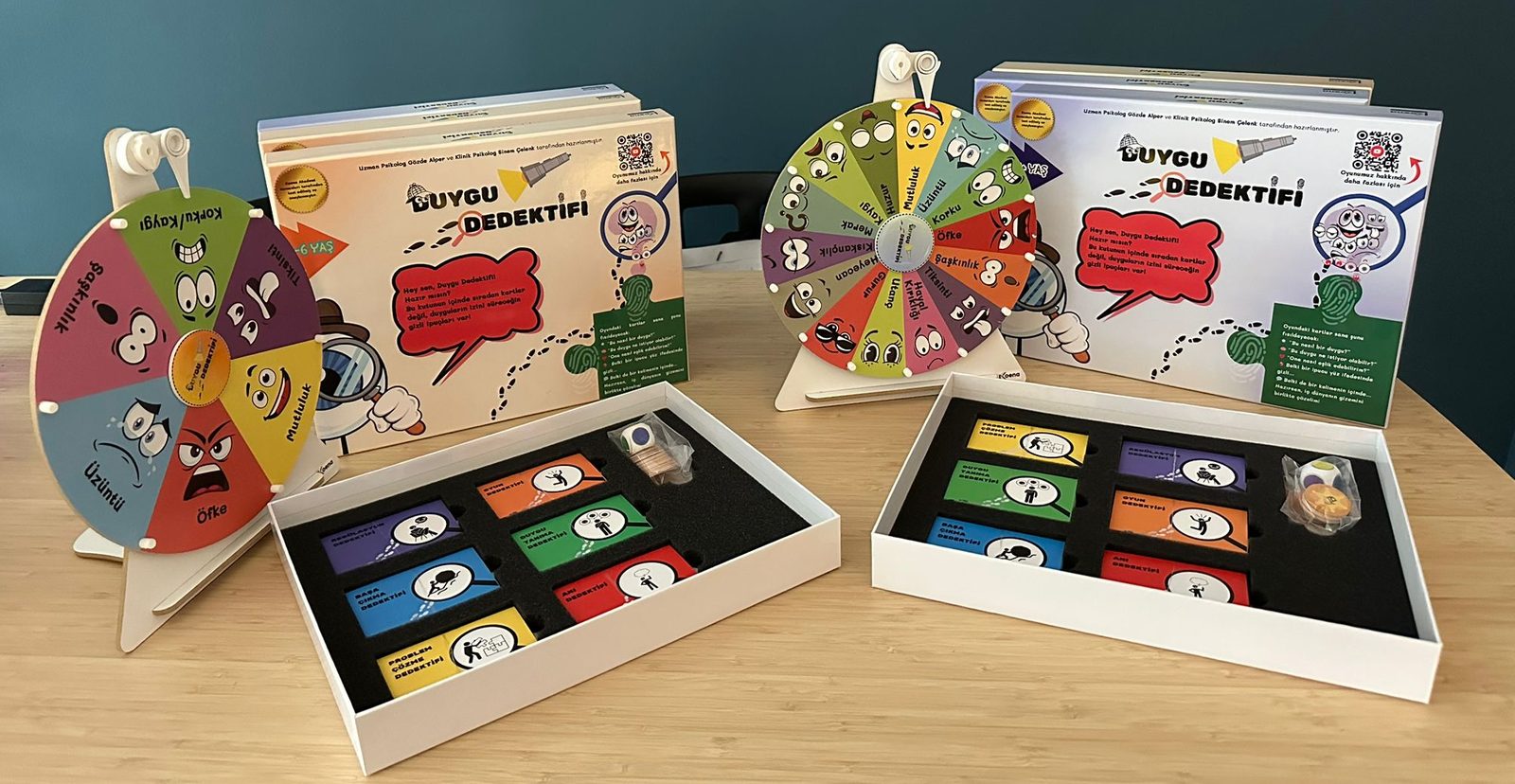
A wheel on a wooden stand. It comes to the rescue when a child struggles to name a feeling.
Each colour is its own area of work: memory, coping, regulation, problem solving, play and recognising emotions.
The game starts with a roll. Each face of the die stands for a card category.
Players earn a badge for completing tasks that call for more reflection or expression.
Duygu Dedektifi is not a pile of random questions. Each deck matches a separate area of work, so the adult at the table can also play with a single colour to suit the day's goal.
The child recalls and tells a memory of their own. A feeling stops being an abstract idea and becomes a scene from their own life.
What do I do when a feeling arrives, what does my body feel, who can I ask for help? Concrete, practical ways of coping are discussed.
Breathing, imagination and relaxation exercises. The deck that slows the game down — useful after an intense moment of sharing.
A real-life situation is described and the child comes up with their own solution. There is no single right answer; the aim is to generate options.
Role play, imitation and acting out. A feeling is expressed with the face, voice and body before it is put into words.
Guess, compare, draw. Feelings are given a colour, a sound and a shape, and players learn to read each other's expressions.
Play one-to-one or in a group. In groups, players take turns drawing cards.
The game begins with a roll. Each colour on the die stands for a card category.
Take the top card from the deck matching the colour you rolled and read the instruction.
Answer the question or carry out the task. If the card says “Spin the Wheel”, spin the Emotion Wheel first.
Players who complete tasks that call for more reflection or expression earn a “Detective Badge”.
The aim is to learn, to feel and to explore together. If you like, the player with the most badges can be named “Detective of the Day”. Some cards include drawing tasks, so keep paper and a pen or a whiteboard nearby.
The guide inside the box was written not for running the game but for accompanying the child. In summary:
Every child talks at their own pace and doesn't have to answer every question. Sometimes staying quiet is a form of expression too.
Instead of analytical questions like “Why do you feel that way?”, use supportive phrases like “You can share if you want to.”
This is not a right-or-wrong game. Remind yourself and the child of that.
Sentences like “Sometimes when I'm scared I feel like running away too” help the child open up.
You can stop the game if a child is struggling. Choose a quiet place without distractions.
The goal is to build a deeper connection with the child, to understand them and to make room for them to express themselves.
“This discovery is a journey, not a race.” Duygu Dedektifi guide — a note for adults
To get beyond one-word answers to “How was your day?”
For emotional literacy and guidance work in the classroom.
For psychologists, educators and play therapists.
For days when the box can't come along: the same colour system, the same Emotion Wheel, the same approach. The Android version is on Google Play as Detective Emo; the iOS version is coming soon to the App Store.
The questions in the digital version are the same as the cards in the box. Besides Turkish, the app is being prepared in eleven languages, including English.
No ads, no cookies, no accounts. The profile name and age group in the game stay on your device and are never sent to our server. Privacy
Ages 3-6 and 7+ content is separated at system level; a card from one age group never appears in the other.
The app is free to install and part of it can be played at no cost. The full version is unlocked inside the app.
Scan the QR code with your phone’s camera or tap the button. The app is published by Thinkiplay.

The ages 3-6 box is written for children who cannot read yet: questions are short, the language is simple and the Emotion Wheel has six core feelings. In the ages 7+ box the questions are longer and the scenarios more layered; the wheel has fourteen feelings, including pride, jealousy, disappointment and curiosity. The boxes are sold separately and their contents do not replace each other. The ages 7+ box is currently sold out.
Not at the moment. Boxes are shipped within Türkiye only, and the game and its cards are in Turkish. To order, fill in the order form (in Turkish); you will then receive the bank details and the amount for the box by email, and payment is by bank transfer. Boxes ship with Yurtiçi Kargo; the shipping fee (200 TL) is paid on delivery. Questions: siparis@duygudedektifi.com.
The game can be played one-to-one or in a group. In groups, players take turns drawing cards. In every case an adult should be at the table.
That's the guide's first rule: don't push. Every child talks at their own pace and doesn't have to answer every question. Sometimes staying quiet is a form of expression too. You can put the card down and move on to the next one.
The game was created by Psychologist Gözde Alper and Clinical Psychologist Sinem Çelenk.
No. The wheel is used with cards marked “Spin the Wheel”. But on other cards, too, if you find it hard to name or express a feeling you can turn to the wheel — and point to the feeling you can't put a name to.
Yes. The game suits circle time, guidance lessons and group work. For school, nursery and institutional orders, choose the company invoice option on the order form or write to siparis@duygudedektifi.com.
No. Duygu Dedektifi is not a measurement, assessment or diagnostic tool. It is play material that supports emotional literacy; in the guide's own words, the cards are “tools for building a deeper connection with the child, understanding them and making room for them to express themselves”.
The Android app is available on Google Play as Detective Emo. The iOS version is in preparation; its release will be announced on this page and on our Instagram account.
No. The board game and the digital app are two independent products. The app is free to install, part of it can be played for free and the full version is purchased inside the app. Owning the box does not give any extra rights in the app.
Orders are placed through the order form on this site (in Turkish). Payment is by bank transfer; boxes ship within Türkiye only.
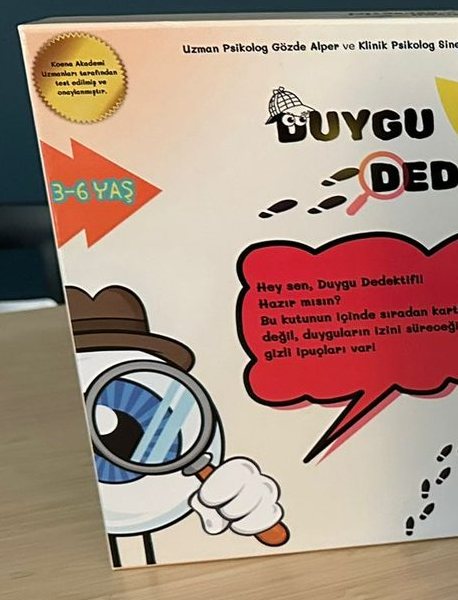 AGES 3-6
Short questions, simple language, an Emotion Wheel with six core feelings. Designed with non-readers in mind.
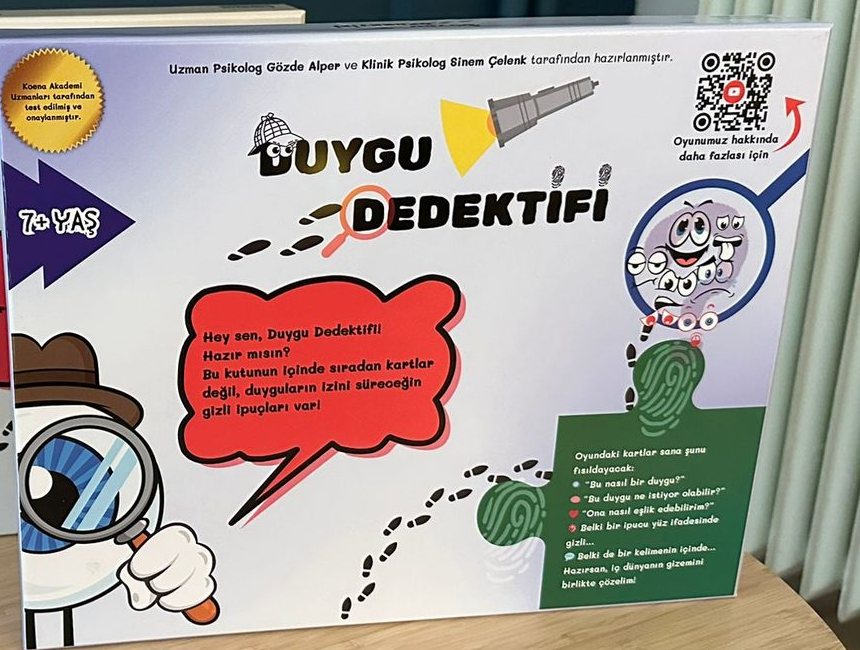 SOLD OUT
Layered scenarios and an Emotion Wheel with fourteen feelings, including pride, jealousy and disappointment.
Currently unavailableQuestions? Write to siparis@duygudedektifi.com or message us on Instagram at @duygudedektifioyunu.